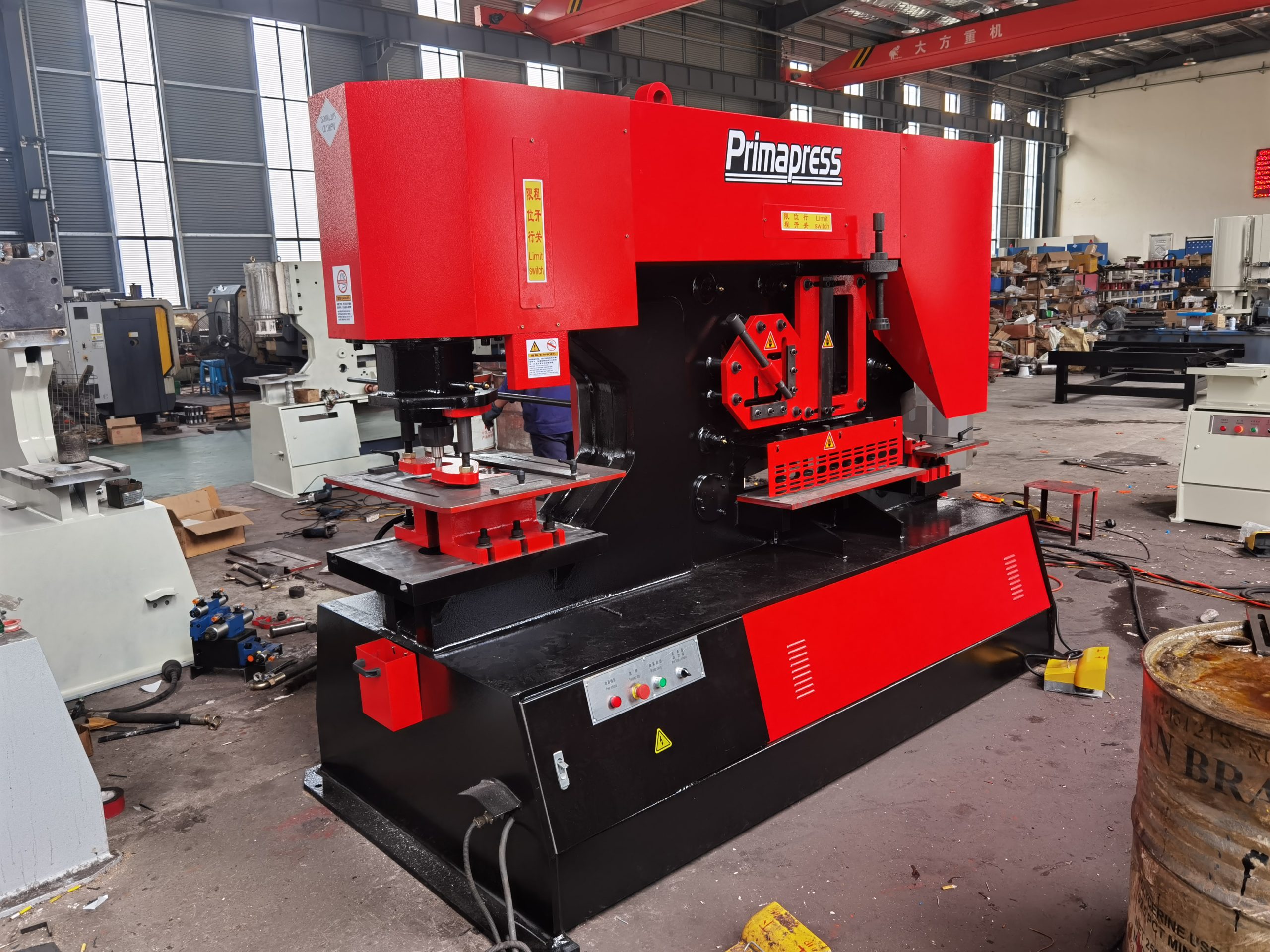
Many fabrication businesses struggle to choose a notching machine. Metalworkers use notching to form corners, slots, and shapes for welding or bending. An ironworker notcher and laser cutting equipment are suggested for this project. Each has merits, and the choice depends on your job. Ironworker notchers use punches and dies to swiftly cut V-shaped notches. But laser cutting employs a concentrated beam of light to burn through metal and carve many forms. This article plainly contrasts these two ways. Costs, speed, accuracy, and ideal usage will be examined. You’ll know which technology works for your store at the end. The decision counts whether you’re a tiny structural steel workshop or a huge sophisticated part company. Let us explain the differences so you can choose wisely without getting overwhelmed.
Cost Comparison Between Ironworker Notchers and Laser Cutting
Initial Investment and Operating Costs
The upfront price of an ironworker notcher is much lower than that of a laser cutting machine. A good ironworker with a notching station typically costs between $15,000 and $50,000, depending on tonnage and features. Laser cutting machines, especially those with sufficient power to cut thicker metals, start around $80,000 and can easily exceed $200,000. For a small shop on a tight budget, the ironworker is a friendly option that does not require a huge loan or leasing plan.
Operating costs also differ. The ironworker notcher uses simple punch and die tools. These tools wear down over time, especially when cutting hard materials. Replacing a punch and die set costs a few hundred dollars. Laser cutters rely on consumables like lenses, nozzles, and assist gases such as oxygen or nitrogen. These items add up quickly, particularly when cutting thicker plate. Gas consumption alone can run into thousands of dollars per year for a busy shop. Electricity usage is another factor. A laser machine draws high power, often 30 to 60 kilowatts, while an ironworker runs on a standard motor drawing around 5 to 10 kilowatts. Over a year, the energy savings with an ironworker notcher are noticeable.
Energy and Maintenance Requirements
Daily energy use important for long-shift businesses. Only when the hydraulic pump motor operates does an ironworker notcher require power. The motor may be switched off or on standby during idle time. Continuous cooling, exhaust fans, and chillers are needed for laser cutters. This support mechanism increases the electric expense even when the laser is not cutting. In areas with high power prices, this might favour an ironworker.
Maintenance is another difference between the machines. The ironworker notcher’s hydraulics are simple. Main chores include checking fluid levels, replacing filters, and lubricating moving parts. A experienced technician can do most repairs at home. Laser cutter issues need laser source, beam delivery, or control electronics specialists. If replacement components are unavailable, laser repairs might take days. For shops that need regular uptime, the ironworker’s simplicity minimises stress. Both equipment are dependable, but laser maintenance is more expensive and complicated.
Speed and Productivity in Notching Operations
Simple Cuts vs Complex Profiles
For standard V-notches on beam flanges, angle iron, or flat bar, the ironworker notcher is hard to beat. A good operator can complete a notch in about 10 to 20 seconds, including positioning the part and activating the foot pedal. This speed comes from the direct punch action. No fancy programming or nesting is needed. You load the part, align it to the stops, and cycle the machine. The process repeats quickly for repetitive production runs.

Laser cutting offers more flexibility but is slower for simple notches. The laser beam must trace the entire shape of the notch, which takes more time. For a standard V-notch, the cut time might be 5 to 10 seconds, but this does not account for part handling and programming. Before cutting, you must create a CAD file, set up the cutting parameters, and load the program. For a single part, the setup time outweighs the cut time. Where laser shines is in cutting complex profiles. Curved slots, odd angles, or multiple notches on one part are easy for laser but impossible for a standard ironworker notcher. If your work involves custom shapes, laser gives you freedom.

Setup Time and Production Throughput
Switching between jobs on an ironworker notcher is fast. Changing the punch and die for a different notch size takes a few minutes. Adjusting the stops is quick. For a shop that runs batches of similar parts, the ironworker supports high throughput. One operator can produce hundreds of notches per hour without breaking a sweat.
Laser cutting requires more preparation. You need to nest parts on the sheet to optimize material use, load the program, and verify the settings. For a single small part, this setup might take 15 to 30 minutes. For large production runs with many identical parts, the setup time is spread across many pieces, making the laser efficient. However, for urgent repair jobs or small orders of ten pieces, the ironworker notcher wins because you can start cutting almost immediately. Throughput also depends on part handling. Laser cutters often use a fixed table, so loading and unloading sheets takes time. The ironworker allows you to handle individual parts directly, which is convenient for small items.
Accuracy and Edge Quality Comparison
Functional Accuracy vs Cosmetic Precision
Ironworker notchers produce consistent results within a few thousandths of an inch. For most fabrication work, this accuracy is plenty. A clean V-notch for a welded corner joint does not require micrometer precision. The punch and die wear slightly over time, but regular tool maintenance keeps parts within spec. The edges from an ironworker are slightly sheared but free of burrs in most cases. The cut face is smooth enough for immediate use in structural applications.
Laser cutters deliver higher precision, often within a couple of thousandths of an inch on thin material. The beam cuts without mechanical force, so there is no tooling wear to affect accuracy. However, laser cutting produces a heat-affected zone (HAZ). This zone can change the metal’s hardness and cause slight discoloration on the edge. For cosmetic parts that will be visible in a finished product, the laser gives a clean cut. For heavy structural members, the HAZ is usually irrelevant. The ironworker notcher leaves a cold sheared edge with no heat effects. So if your parts need to be welded immediately without cleaning the edge, the ironworker may be a better choice.
Secondary Finishing Requirements
Parts from an ironworker notcher often require little to no secondary work. The notch is ready to fit into a joint for welding or bolting. Some minor burrs can occur on the exit side of the punch, but these are easily removed with a file or grinder. For most shops, the ironworker output is acceptable for production.
Laser-cut parts can have small dross or slag on the bottom edge, especially in thicker materials. This residue must be removed before welding. Also, the edges are slightly rough due to the laser striations. For parts that will be painted or powder coated, the surface may need light sanding or shot blasting. The time spent on deburring and cleaning can add up. In a high-volume environment, the ironworker notcher reduces this extra step, saving labor costs. For precision parts that require a smooth edge, laser is better, but you must plan for finishing work.
Best Application Scenarios for Each Technology
Decision Guide for Fabrication Shops
Small to medium fabrication shops doing structural steel work find the ironworker notcher ideal. Tasks like notching beams for stair stringers, coping angle iron for frames, or cutting slots in flat bar are everyday jobs. The machine is rugged, simple, and fast. If your parts are mostly standard angles, channels, and flats, the ironworker notcher serves you well. It fits into a small floor space and does not require high-end operators.
Laser cutting suits shops that handle mixed production with complex shapes. If you frequently need intricate notches, rounded corners, or holes placed precisely along the notch edge, laser gives you freedom. Shops serving industries like aerospace, medical devices, or custom architectural metalwork lean toward laser. The machine can also cut complete parts from a sheet, reducing the need for other processes. For a job shop that takes on varied work, the laser provides versatility. The ironworker notcher is a specialist tool for specific notching tasks. The laser is a generalist that can notch, cut, and profile.
Combining Ironworker and Laser Processes
Many smart shops do not choose one over the other. They use both machines to handle different jobs. The ironworker notcher handles high-volume, simple notches quickly and cheaply. The laser takes care of complex or low-volume parts that require custom shapes. This combination balances speed and flexibility. For example, a shop might use the ironworker for 80 percent of its notching work and reserve the laser for the tricky 20 percent. This approach reduces wear on the laser and lowers operating costs.
Another benefit is workflow efficiency. The ironworker operator can process stock parts while the laser operator nests cut files for complex orders. Both machines run simultaneously, increasing total output. For shops that already own a laser, adding an ironworker notcher is a low-cost addition that boosts productivity. For shops starting fresh, buying a used ironworker and then expanding to a laser later is a sensible growth path. The key is to know your typical part mix and choose tools that cover your most common needs.
Conclusion
Choosing between an ironworker notcher and laser cutting for notching tasks comes down to your shop’s daily work. The ironworker excels at simple, repetitive notches with low costs and fast operation. Laser offers flexibility for complex shapes and high precision but comes with higher expenses and slower setup for small batches. Neither machine is perfect for every job. The best strategy for many fabrication shops is to use both, leveraging the strengths of each.